
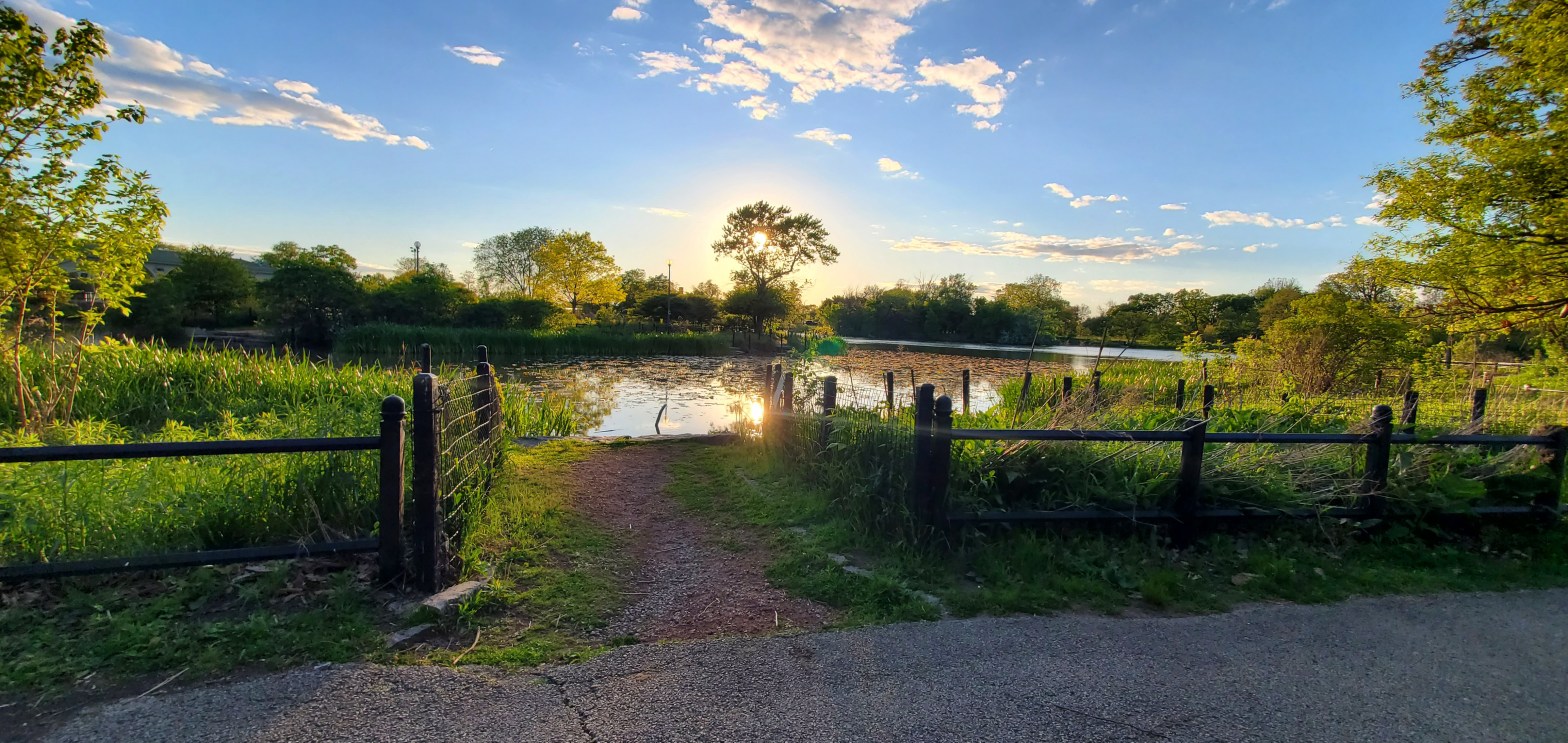
One cool spring evening, I walked a few blocks up to my new neighborhood park to watch the sun set. I found a bench along the gravel walking path that encircled the pond and sat down. A gentle breeze kept the air fresh like little bits of wilted mint floating around in a glass of ice water. The birds perched in the tree behind me were singing to their chirping newborns about what a fine evening it was and how glad they were to be alive and be birds.
This was my first evening spent in Chicago’s Humboldt Park since Emily and I had moved to the city a few weeks back, but I could tell right away that the park was a damn good one — and I would know. I’d spent the last few months traveling across western Europe with my soon-to-be wife, repeating the cycle of falling in love with its bucolic scenery only to abruptly separate from it one week later. The string of passionate affairs we had with these European parks and vistas was potentiated by the impermanence of our trip. A shortened clock can sometimes heighten the romance of a fling with a touch of delicate fury. It’s a tradeoff for saying goodbye to that place, maybe forever.
A flick and whiz interrupted the tranquility as a man standing on the pier across the way cast a fishing rod, his dark silhouette set against the reddish-orange sunglow of the waning day. The baited hook struck the glassy, mirrored surface of the pond, sending ripples cascading outwards and causing a nearby goose and its three fuzzy goslings to ever so slightly bob like buoys. They were unbothered and kept paddling around the peninsula that opened up to a lagoon of flowering lily pads.
Yes, this was a damn good park. It reminded me of so many other landscapes dear to me, with lush grass and sparse tree cover that characterized the trail between the gardens of Versailles and the Grand Trianon. The pond was healthy and well-maintained like the Amstel River on that sunny afternoon when Emily and I traced a path along its shores. We were on a mission to visit a windmill that was older and in better current operation than our perilous American republic, but I digress.
Moreover, I thought Humboldt Park was damn good because it was used respectfully by community members. Parents and their giggling toddlers admired the wildlife, a precious communion seldom enjoyed in a cityscape. It’s a compromise we make in the calculus of living in a metropolis, but that tradeoff didn’t seem to exist in this oasis.
Nearby, a group of young adults, whose effortless style I was admittedly a little jealous of, were lounging on the rocky shoreside, chatting away like the myriad groups of brash college kids that overtook the cobbled streets of central Bologna every sweaty summer night. Only, for better or worse, these young Chicagoans weren’t relentlessly puffing on strong hand-rolled cigarettes like their lives depended on it.
An airplane tearing across the distant sky caught my attention. It was fleeing the fiery sunset into the last scraps of pale blue that clung to the edges of the encroaching twilight. For the first time in a while, I didn’t wish to be aboard it.
As I sat cross-legged typing the jagged first draft of this essay on my phone, a curious dog approached and sniffed my boots. Its owner gently yanked the inquisitive animal by the leash and explained that it was time to get going, because the sun would soon set and this day would end forever. But not yet.
Yes, this was a damn good park. It reminded me of many other beautiful places, yet my admiration was defined by its differences. Mainly, when I eventually left later that evening, I didn’t feel the vaguely bittersweet sense of saudade that I’d grown accustomed to when saying goodbye. Because this place, unlike all the others, was mine.
 Millerwiller